



Recording happens where the voices are.
Indian languages record in our own studio. International languages record with native casts in partner studios worldwide. Our own team handles all audio post.

Why we record close to native talent.
Distributed recording is harder to coordinate. It is the only version a native audience accepts.
One facility, twenty-six languages
Whoever is locally available, often non-native performers approximating an accent.
Recorded in-region
Native performers, directed by someone who speaks the language, in a facility suited to the work.
The standard, wherever it is.
What each partner studio must provide. Where one falls short, we say so instead of disguising it in the mix.
- Acoustically treated space with a suitable noise floor
- A professional signal chain
- An engineer who has recorded dialogue for picture
- Remote-directed sessions, so our team can be in the room
- Secure handling of material, consistent with our own obligations
- Consistent file delivery: sample rate, bit depth, naming and take structure
Where the work is checked.
Our studio has an acoustically treated control room, a separately isolated dubbing booth and a dedicated 5.1 monitoring environment, and it is being expanded as the team grows. Indian-language recording, dialogue editing, mixing, mastering and QC run here, and international recordings are finished here, so every delivery leaves through one chain. QC on laptop speakers is not QC. Visits by appointment.
Centralized, deliberately.
Recording is distributed. Post is not. A twelve-language dub recorded across a dozen facilities arrives with a dozen room tones, mic characteristics and level conventions. Distributed post would give you twelve versions that do not match. So every project, in every language, is edited, designed, mixed and mastered by our own team against a single reference.
Studio photos
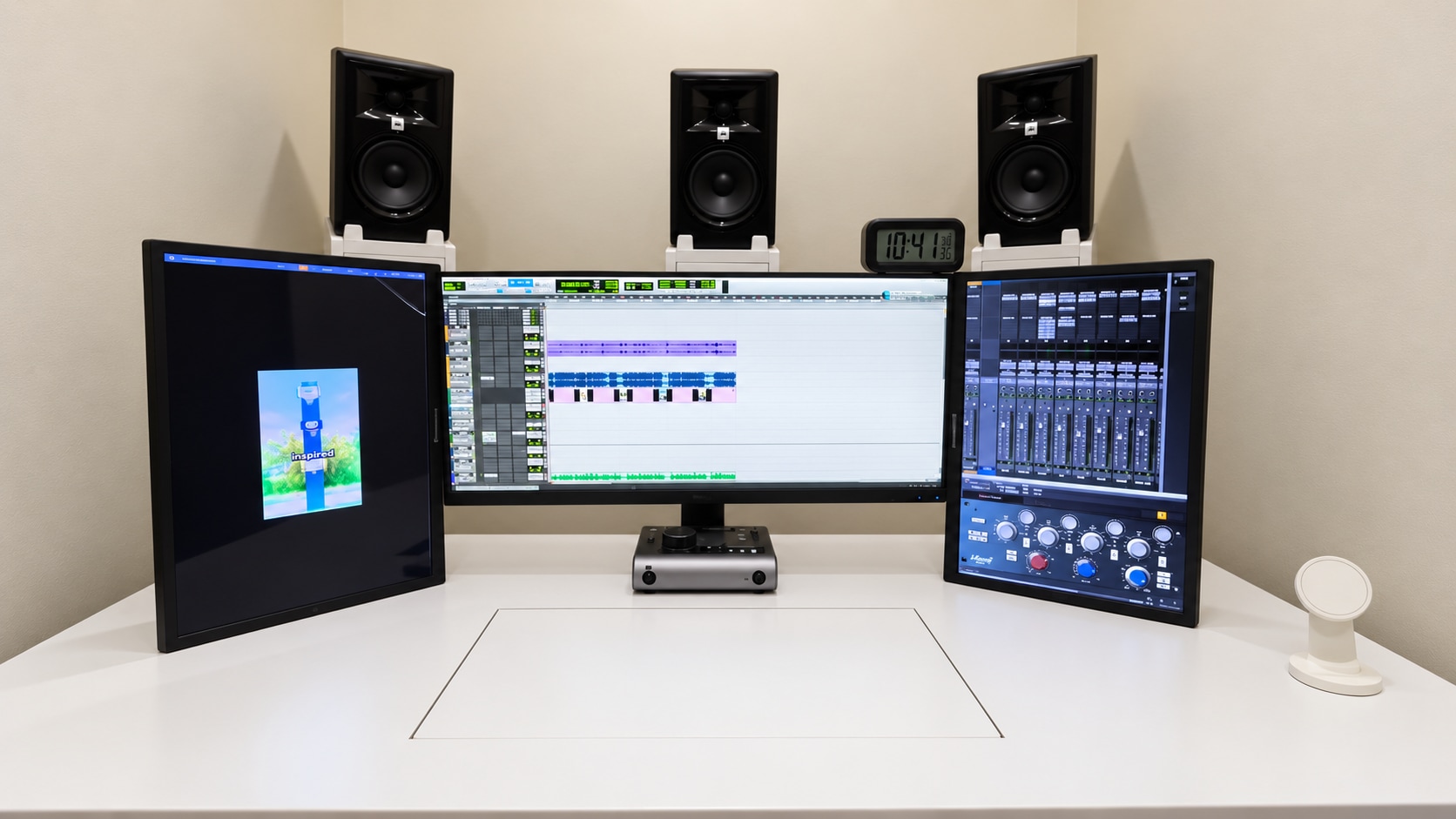
5.1 mixing studio 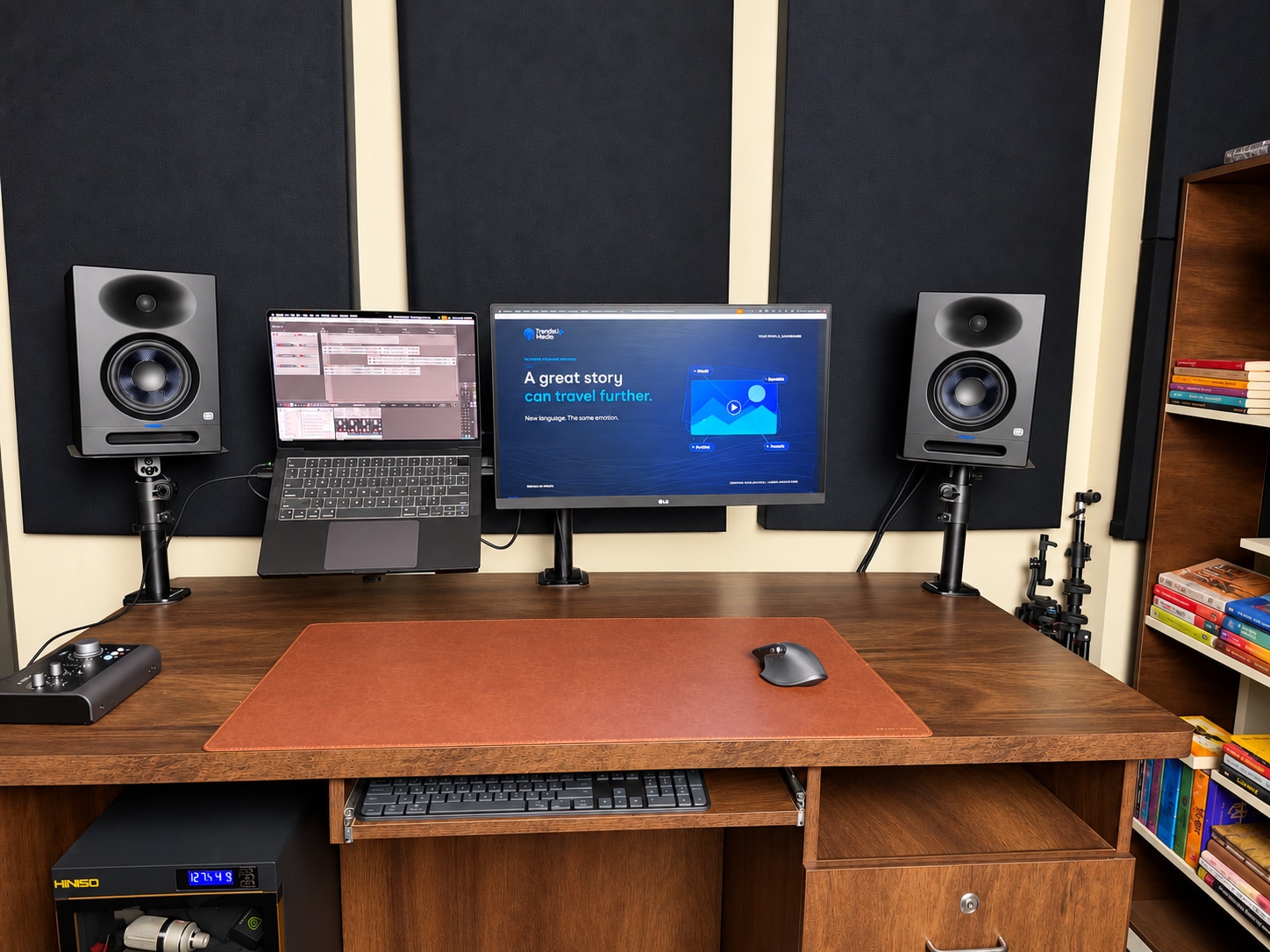
QC and stereo mixing room 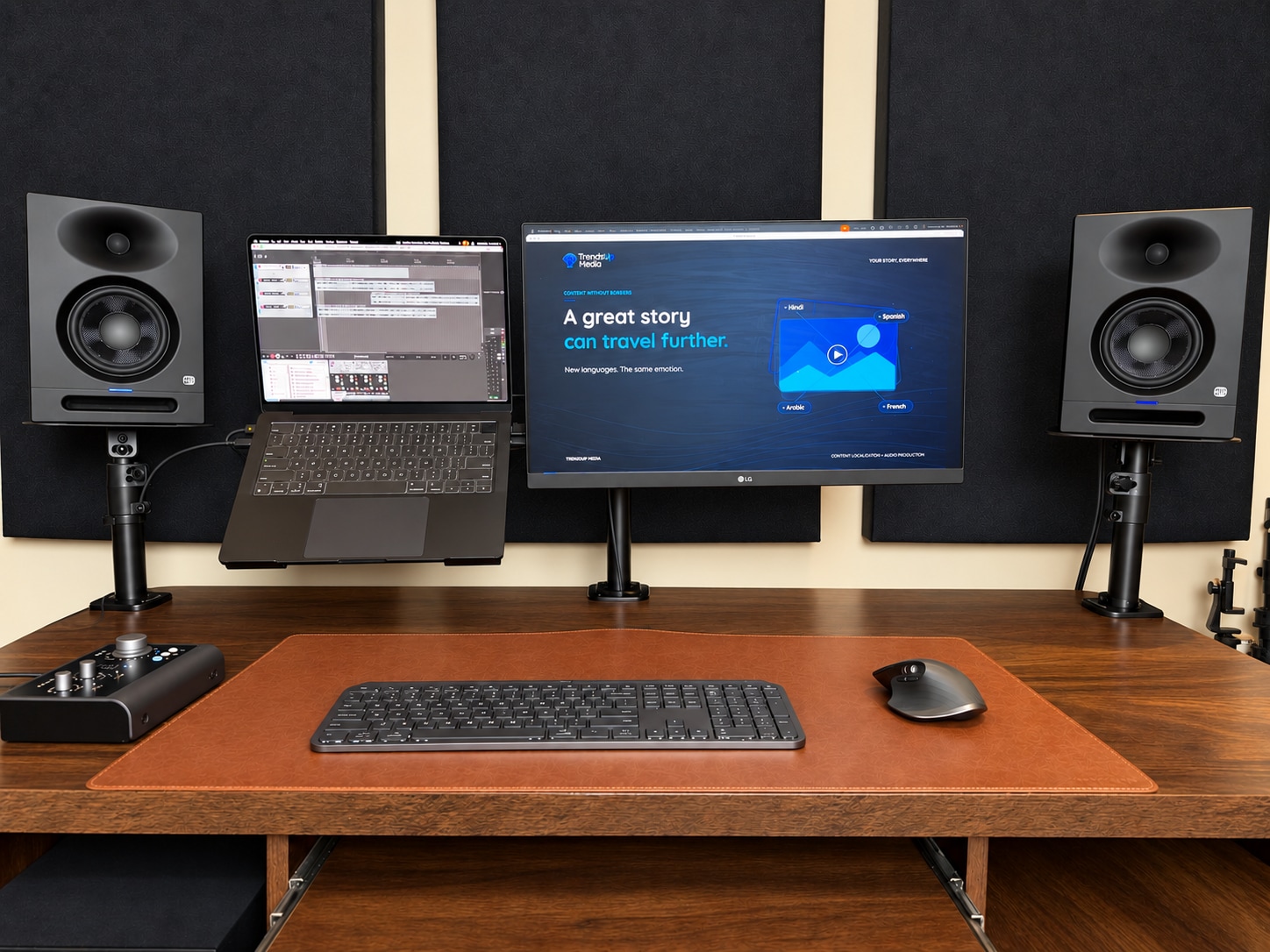
QC room 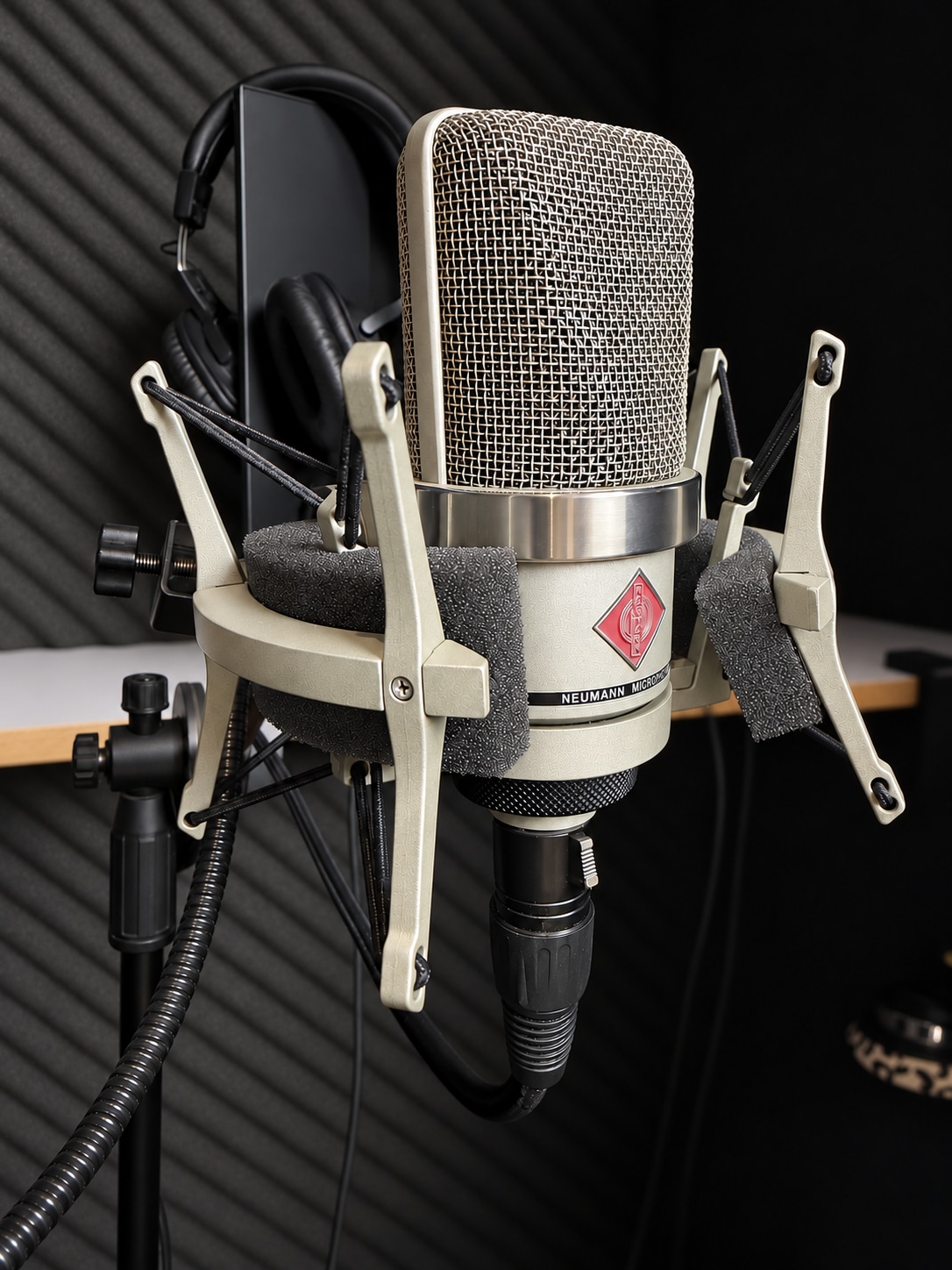
Dubbing booth


What we work on.
Pro Tools
Recording, editing and mixing.
Mac
Mac systems throughout.
Neumann
Neumann microphones in the signal chain.
Being in the room from elsewhere.
Sessions across the partner network are directed remotely, with our casting and direction leads present live rather than reviewing takes afterwards. Clients are welcome to attend their own sessions the same way. It is often the fastest route to a performance note that would otherwise take two rounds of written feedback.
Our Global Network
From New York to New Delhi, our network spans the globe to bring your stories closer to every audience.
Get in TouchFAQs
Frequently
Asked Questions.
Everything you need to know about our services, process and how we work
Do you have your own studio?
Why not record everything in one place?
What equipment do you use?
Can I attend a recording session?
Ready to bring your story to life?
Let's make your story sound amazing, everywhere.